

Hair Treatment at Home for Hair Fall: 5 DIY Remedies
The best hair treatment at home for hair fall is one you can repeat twice a week for at least three months, that is gentle on your scalp, and that has some evidence behind it. Of the five remedies below, coconut oil with curry leaves suits dry, brittle hair that snaps. Onion juice suits patchy thinning if you can live with the smell. Rosemary oil suits you if you want the best-studied botanical. A fenugreek mask suits rough, weak strands, and aloe vera gel suits an itchy, flaky or sensitive scalp.
Seeing strands on your brush and bathroom floor is stressful. Losing 50 to 100 hairs a day is normal, so the first job is to find out whether you are shedding more than that or simply noticing it. Home remedies cannot fix thyroid, iron or hormone-related loss. They can cut breakage, calm the scalp and support growth when the cause is mild. This article gives you exact quantities, steps and frequency for each remedy, plus an honest note on what the evidence says.
Prokarehub sells salon-grade hair fall products across India, so we also tell you when a kitchen remedy has reached its limit and a formulated treatment makes more sense.
1. Coconut oil and curry leaf massage
A warm coconut oil massage is the easiest home treatment for hair fall caused by breakage. It coats the strand and, with the massage, gives your scalp a regular routine.
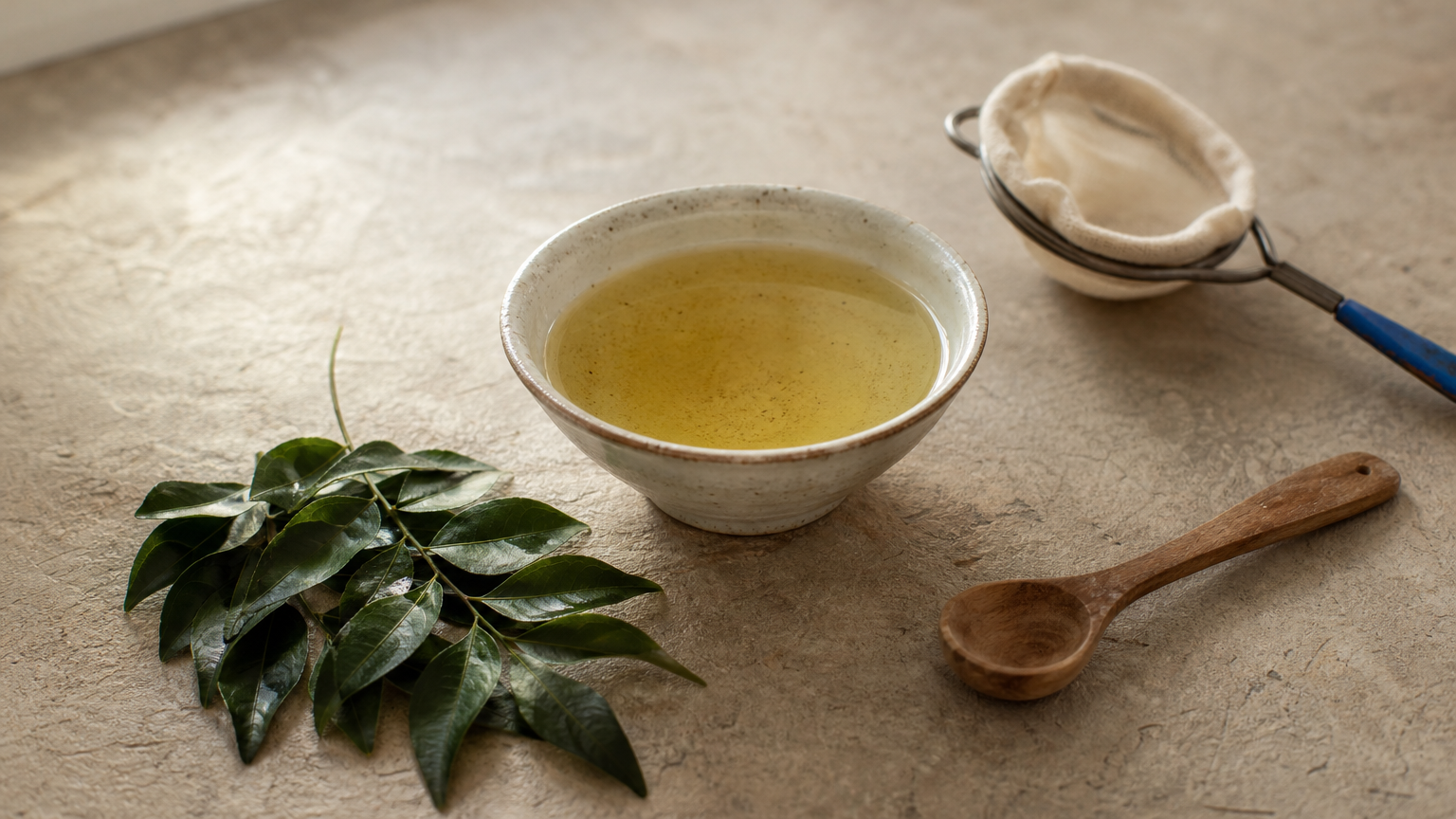
How to make and use it
Heat 3 tablespoons of coconut oil on low heat with a handful of fresh curry leaves, about 15. Stop when the leaves darken and stop crackling.
- Strain the oil and let it cool until it is comfortably warm.
- Part your hair in sections and massage the oil into your scalp with your fingertips for 5 minutes.
- Leave it on for 1 to 2 hours, or overnight if your scalp is dry.
- Wash out with a mild shampoo, twice if needed.
Repeat twice a week.
What to know before you try it
Coconut oil has a small study behind it showing it reduces protein loss from hair during washing. That means less breakage, not new growth. Curry leaves are a traditional addition with little clinical evidence, so treat them as optional. The massage itself helps. In a small 2016 Japanese study, men who massaged their scalps for about four minutes a day saw thicker hair after 24 weeks.
Oil cannot grow new hair, but it can stop the hair you have from snapping.
Skip this one if your scalp is oily or dandruff-prone. Heavy oil on a flaky scalp can make flaking worse.
2. Onion juice scalp treatment
Onion juice is the most talked-about home remedy for hair fall control, and it works best for patchy loss rather than all-over shedding.
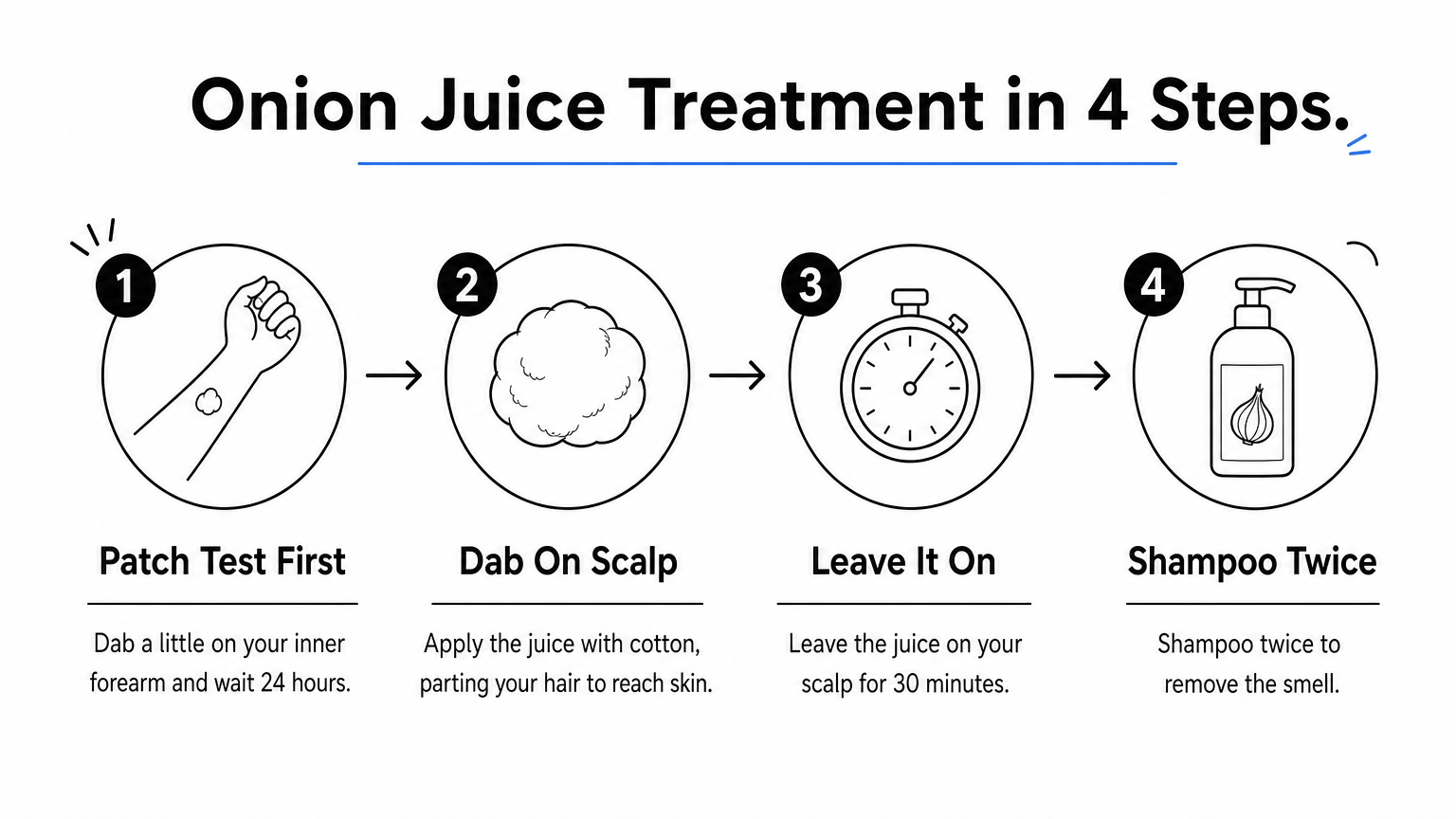
How to make and use it
Blend one medium onion and strain it through a muslin cloth. You should get about 3 tablespoons of juice. Mixing in 1 teaspoon of coconut oil softens the smell and the sting.
- Patch test first: dab a little on your inner forearm and wait 24 hours.
- Dab the juice onto your scalp with cotton, parting your hair so it reaches the skin.
- Leave it on for 30 minutes.
- Shampoo twice to remove the smell.
Use it once or twice a week for at least 6 to 8 weeks before judging it.
What to know before you try it
A small 2002 trial in people with patchy hair loss (alopecia areata) found that onion juice helped regrowth. Nobody has shown it works for general shedding, so set realistic expectations. If the juice stings badly, burns or leaves red patches, stop.
Onion juice has real evidence for patchy loss and almost none for general thinning.
Keep it away from your eyes and from any broken or inflamed skin.
3. Rosemary oil in a carrier oil
Rosemary oil is the best-studied natural option on this list. A 2015 trial compared it with 2% minoxidil over six months and found similar increases in hair count, with less scalp itching in the rosemary group. The trial was small, but it is the strongest evidence for any botanical here.
How to make and use it
Add 4 drops of rosemary essential oil to 1 tablespoon of a carrier oil such as coconut, jojoba or almond. Never apply the essential oil undiluted.
- Mix the blend in a small bowl.
- Massage it into your scalp for 5 minutes.
- Leave it for 30 to 60 minutes.
- Wash out with a gentle shampoo.
Use it 3 to 4 times a week and give it at least three to six months, since hair cycles are slow.
What to know before you try it
Rosemary oil can irritate sensitive skin, so patch test it like the others. Check with your doctor first if you are pregnant or have epilepsy. Buy a pure essential oil with the botanical name Rosmarinus officinalis on the label, not a "fragrance oil".
If you only try one botanical, make it diluted rosemary oil, and give it six months.
4. Fenugreek (methi) hair mask
A fenugreek mask is a conditioning treatment that makes weak, rough hair easier to handle and less likely to snap. Think of it as a breakage fighter, not a regrowth treatment.
How to make and use it
Soak 2 tablespoons of fenugreek seeds in water overnight. Grind them with their soaking water into a smooth paste. Add 2 tablespoons of plain curd (dahi) if your hair is dry.
- Apply the paste to your scalp and then along your lengths.
- Leave it on for 30 minutes, but do not let it dry hard.
- Rinse with cool water, then shampoo.
Use it once a week. More often can leave the scalp feeling tight.
What to know before you try it
Evidence for fenugreek is thin. The seeds contain protein and nicotinic acid, and the remedy has a long traditional use in Indian homes, but there is no strong human trial for hair fall. Fenugreek is a legume, so skip it if you are allergic to chickpeas or peanuts. The paste also becomes sticky when it dries, so rinse it thoroughly.
A fenugreek mask softens and protects hair, and that alone can mean fewer broken strands in the brush.
5. Aloe vera gel scalp treatment
Aloe vera gel calms an itchy, flaky or irritated scalp, and a calm scalp means less scratching and less hair pulled loose. Evidence for hair regrowth is limited, so use it for scalp comfort.

How to make and use it
Scoop about 2 tablespoons of gel from a fresh leaf, or use pure gel with no added colour or fragrance.
- Rinse the leaf gel to remove the yellow sap, which can irritate skin.
- Massage the gel into your scalp for 2 to 3 minutes.
- Leave it on for 30 minutes.
- Rinse with lukewarm water and shampoo as usual.
Use it 2 to 3 times a week, especially if your scalp feels itchy between washes.
What to know before you try it
Patch test first, because some people react to aloe. Home remedies are slow, so judge them over three months. If shedding stays heavy after that, a formulated treatment may be the next step. Prokarehub's Hair Fall Control & Re-Growth range includes the L'Oréal Professionnel Aminexil Advanced Serum at Rs. 3,150. It is made with aminexil, an ingredient designed for anti-hair-loss care.
Use aloe to keep the scalp calm, and move to a formulated treatment if three months of home care changes nothing.
Which remedy to start with
Start with one remedy that fits your hair, not all five at once. Use coconut oil for breakage, rosemary oil for general thinning, onion juice for patches, fenugreek for rough strands and aloe for an irritated scalp. Stick to it for three months, and see a dermatologist sooner if you lose hair in clumps, see bald patches, or notice a red or scaly scalp.
Results take time, and thinning shows in the meantime. Hair fibers hide thinning and a widening parting instantly, which helps before a wedding or event while your routine does its work.