

Smoothing Hair: What It Is, How It Works, Cost and Risks
Smoothing hair means applying a chemical solution, usually keratin-based, that is worked into the strands and sealed with heat. Frizz drops, shine rises and waves or curls relax. It is semi-permanent. Most results last about 3 to 6 months and fade a little with every wash, and your natural texture grows back at the roots without a harsh line.
That makes a smoothing treatment for hair different from straightening, which reshapes the hair permanently. The right choice depends on your hair type, your budget and how much frizz you fight each morning. Pick the wrong product or the wrong salon and you can pay for dry, limp hair.
This guide explains why smoothing is worth considering, how the process and the main treatment types work, and how smoothing compares with straightening. It also covers what it costs, what can go wrong and how to look after the result. Prokarehub supplies professional keratin, BTX and straightening products to salons and home users across India, so the advice comes from the product side of the chair.
Why smoothing hair is worth understanding
Smoothing hair is worth understanding because it is the most practical way to cut frizz for months without committing to permanently straight hair. In a humid Indian summer or monsoon, that difference is easy to feel.
What a smoothing treatment gives you
A good smoothing hair treatment changes how your hair behaves day to day. Frizz drops sharply, the cuticle lies flatter so hair reflects more light, and styling gets faster because the strands stop fighting the brush. The main gains are:
- Frizz control that holds through humid weather
- Visible shine and a softer feel
- A shorter blow-dry and styling routine
- Waves and curls that look relaxed instead of flattened
Is smoothing good for hair? It is good for how hair looks and handles, but it is not a cure for damage. Many formulas contain conditioning ingredients such as keratin, collagen or oils, so hair often feels better afterwards. The treatment is still chemical, though. Healthy hair tolerates it well, and weak hair needs a gentler plan.
Smoothing improves how your hair behaves, but it does not repair it permanently.
When smoothing is a poor fit
Fine or thinning hair can look flatter after treatment, because smoothing reduces volume. It does nothing for hair fall, so do not book it hoping to fix thinning.
Heavily bleached hair, hair that already breaks, an irritated scalp or recent chemical work all call for a stylist's assessment first. If you are pregnant or breastfeeding, ask your doctor before you book.
How smoothing hair works
Smoothing works by coating the strand with a smoothing agent, then using heat to relax the fibre and seal the cuticle. The hair ends up smoother and absorbs less humidity from the air.
The salon process step by step
Most salon treatments follow the same order, though timings differ by product:
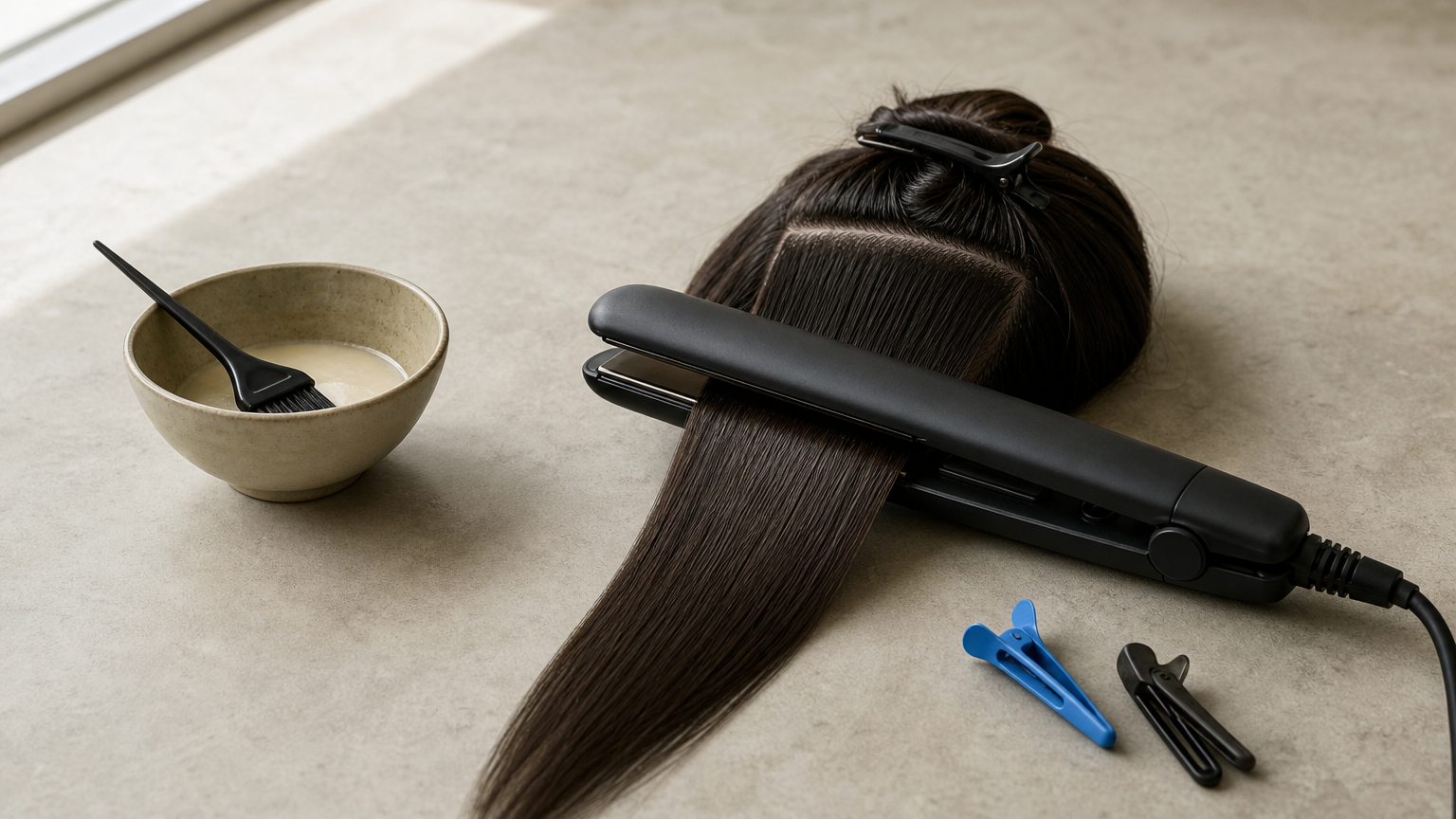
- Consultation and strand test. The stylist checks your hair history and damage, and tests a small section.
- Clarifying wash. A deep-cleansing shampoo removes buildup so the product can penetrate.
- Application. The solution goes on section by section, close to the roots but not on the scalp.
- Processing. The product stays on for the time its maker specifies.
- Drying. The hair is blow-dried, usually with a brush.
- Heat sealing. A flat iron passes over thin sections at the temperature the product allows.
- Finishing. Depending on the product, the hair is rinsed, masked or left as is.
Plan for a long appointment, especially with thick or long hair. The heat step matters most, because it locks the formula in.
The product smooths, but the heat step is what locks the result in.
Types of smoothing treatment
Salons sell similar services under different names, and the differences lie mostly in formula.
- Keratin smoothing works keratin into the hair and seals it with heat. It is the classic option, and product labels typically promise 3 to 5 months.
- Hair BTX (botox) combines keratin with conditioning ingredients such as collagen and targets frizzy, damaged hair. It has nothing to do with the injection.
- Nanoplastia is sold as a smoothing and repair service that reduces frizz and restores shine.
Read the ingredient list whatever the name. "Formaldehyde-free" does not mean free of irritants, because some formulas use other aldehydes such as glyoxal. Ask your stylist which active ingredient the product uses.
Smoothing vs straightening
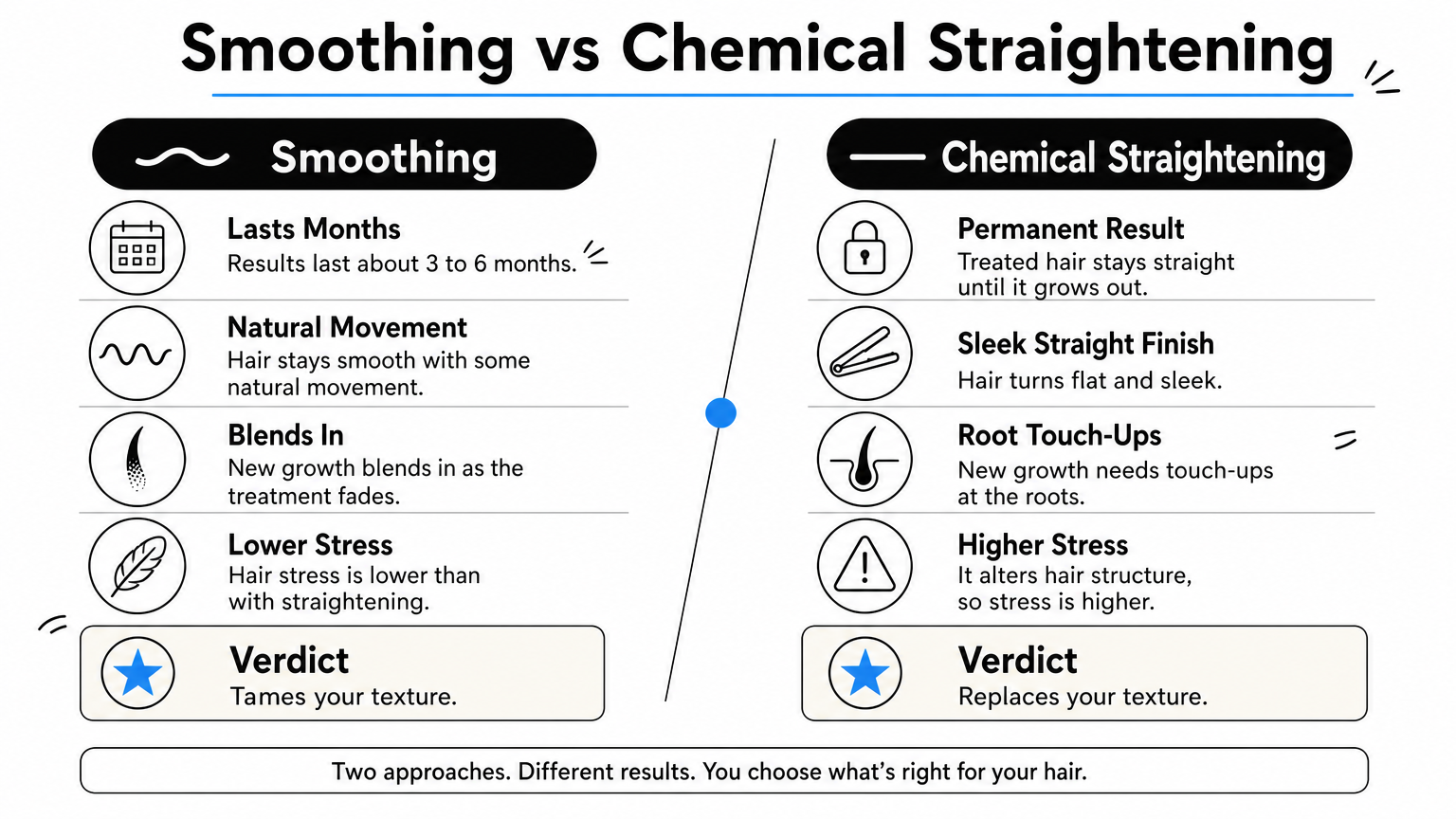
Smoothing softens frizz and relaxes your texture for a few months. Chemical straightening permanently reshapes the hair, so treated lengths stay straight until they grow out. Some sources call smoothing "temporary" and others "semi-permanent". Either way, it fades and is not permanent.
Side-by-side comparison
| Smoothing | Chemical straightening | |
|---|---|---|
| Main goal | Less frizz, more shine, softer waves | Flat, sleek, straight hair |
| Result | Smooth with some natural movement | Pin-straight |
| How long it lasts | About 3 to 6 months | Permanent on treated hair |
| How it works | Solution sealed with heat | Reducing cream, then a neutralizer that rebonds the hair in its new shape |
| New growth | Blends in as the treatment fades | Needs touch-ups at the roots |
| Hair stress | Lower | Higher, as it alters structure |
Salons often call permanent straightening rebonding, so check which service you are booking. A two-step system such as the Krone Professional Shine Bond Straightening Cream, sold with an optional neutralizer for resistant hair, shows the straightening logic. The cream breaks the hair's shape and the neutralizer fixes the new one.
How to choose between them
Your texture and your goal decide it:
- Frizzy, wavy or dull hair that you like with some movement: smoothing.
- Very curly or resistant hair that you want flat: straightening, if your hair is healthy enough.
- Hair that is already straightened or heavily coloured: tell the stylist and expect a strand test.
Choose smoothing to tame your texture and straightening to replace it.
Cost, side effects and aftercare
A smoothing treatment has no honest flat price, because the cost depends on hair length, density, the product and the salon. Get a quote after the stylist has seen your hair.
What drives the cost
Four factors move the bill most:
- Hair length and thickness, which set how much product and time you need
- Product tier, whether a professional brand or a generic formula
- Salon location and stylist experience
- Add-ons such as a mask or a home-care kit
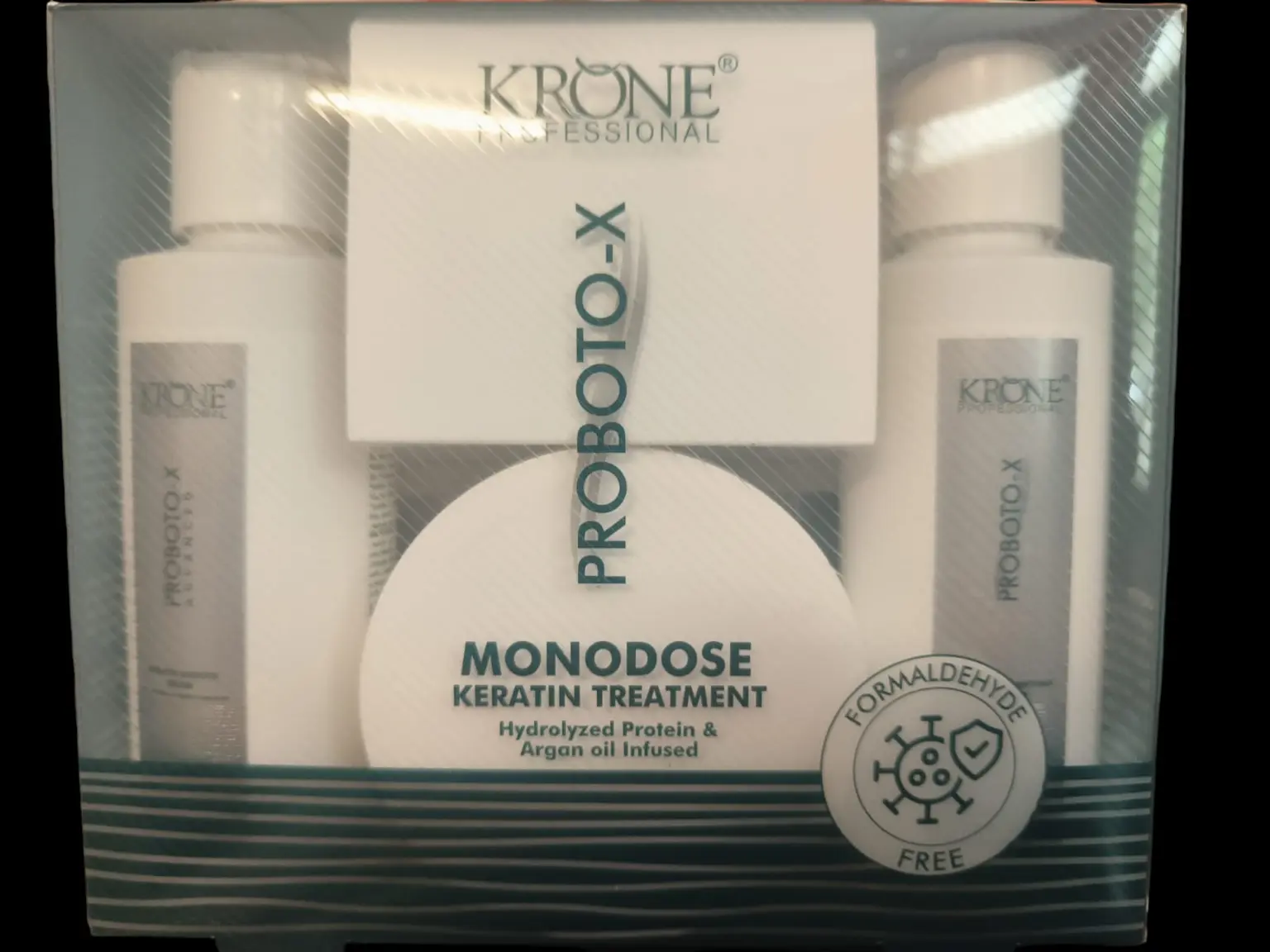
Here is a worked example for the product alone. The Krone Botox Monodose Keratin Treatment Kit is a single-application kit, listed at Rs. 5,525 against a regular Rs. 8,500. If it lasts the 4 to 6 months its listing claims, the product costs about Rs. 920 to Rs. 1,380 a month (5,525 ÷ 6 and 5,525 ÷ 4), before any labour. Redoing a treatment every 4 months means 3 sessions a year, and every 6 months means 2, so frequency matters as much as the sticker price.
Side effects and aftercare
Possible side effects include scalp irritation, stinging eyes or throat from fumes, dryness, breakage on weak hair and allergic reactions. Some smoothing products release formaldehyde when heated, so insist on good ventilation and do a patch test first. Stop and wash out the product if you feel burning.
Aftercare decides how long the result lasts:
- Follow the product's wash-wait instructions exactly. Many brands ask for 48 to 72 hours.
- Use a sulfate-free shampoo and a weekly mask.
- Avoid tight ties, clips and pins in the first days.
- Rinse chlorinated pool water and salt water off quickly.
- Use a heat protectant before styling.
Patch test first, ventilate well, and follow the wash-wait rules to the letter.
Deciding whether to smooth your hair
Smoothing hair is a semi-permanent, heat-sealed treatment that cuts frizz and adds shine for roughly 3 to 6 months. It suits frizzy, wavy and dull hair, it differs from permanent straightening, and it works best on hair healthy enough to handle chemicals. Judge a salon by its patch test, its ingredient transparency and its aftercare advice, not by the lowest quote.
If thinning bothers you more than frizz, smoothing will not help and can flatten fine hair. In that case, hair fibers that hide thinning instantly cover sparse areas in seconds, which is handy before a wedding or event.